
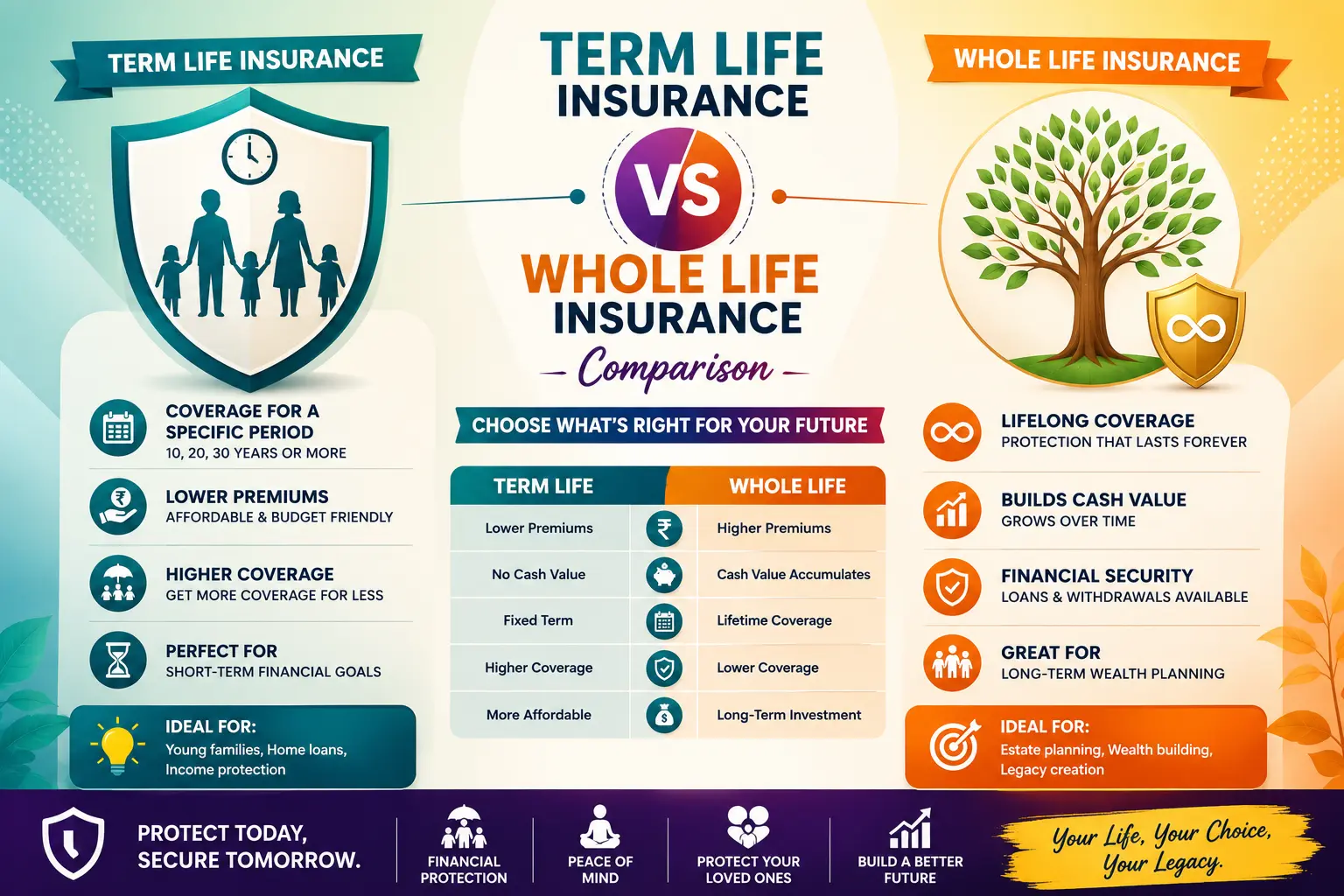
Choosing the right life insurance policy can feel overwhelming, especially when deciding between term life insurance and whole life insurance. A Term life insurance vs whole life insurance comparison helps you understand how these two popular insurance options work, what they cover, and which one best fits your financial goals.
Many people purchase life insurance to protect their loved ones from financial hardship. However, not every policy offers the same benefits. Term life insurance provides affordable protection for a specific period, while whole life insurance offers lifelong coverage along with a cash value component. Understanding these differences can save you money and help you make a confident decision.
Whether you are a young professional, a parent, a homeowner, or someone planning your family’s financial future, this Term life insurance vs whole life insurance comparison explains the key differences, costs, benefits, eligibility requirements, claim process, and expert recommendations. By the end of this guide, you’ll know which policy aligns best with your personal and financial needs.
Featured Snippet Answer
A Term life insurance vs whole life insurance comparison shows that term life insurance provides affordable coverage for a fixed number of years, while whole life insurance offers lifetime protection and builds cash value. Term policies generally cost less, whereas whole life policies provide long-term financial benefits and permanent coverage.
Key Takeaways
- Term life insurance offers lower premiums.
- Whole life insurance provides lifelong protection.
- Whole life policies build cash value over time.
- Term insurance is ideal for temporary financial needs.
- Compare costs, coverage, and goals before choosing.
Insurance Overview
| Feature | Details |
|---|---|
| Insurance Type | Life Insurance |
| Coverage Category | Financial Protection |
| Best For | Individuals, Families, Business Owners |
| Average Premium | Depends on Age, Health, and Coverage |
| Claim Process | Beneficiary Claim Settlement |
| Difficulty Level | Moderate |
Why You Need This Insurance
A Term life insurance vs whole life insurance comparison helps you:
- Understand policy differences.
- Choose coverage that fits your budget.
- Protect your family’s financial future.
- Compare long-term and short-term benefits.
- Avoid purchasing the wrong policy.
- Plan for estate and financial goals.
- Make informed insurance decisions.
What Does Term Life Insurance vs Whole Life Insurance Comparison Cover?
Death Benefit
What it Protects: Provides financial support to beneficiaries after the insured person’s death.
Coverage Limits: Based on the selected policy amount.
Important Notes: Available with both term and whole life insurance.
Income Replacement
What it Protects: Replaces lost household income.
Coverage Limits: Determined by policy value.
Important Notes: Helps families maintain financial stability.
Debt Protection
What it Protects: Mortgages, loans, and other financial obligations.
Coverage Limits: Up to policy amount.
Important Notes: Beneficiaries decide how funds are used.
Funeral Expenses
What it Protects: Covers burial and funeral costs.
Coverage Limits: Depends on policy.
Important Notes: Helps reduce financial stress.
Cash Value (Whole Life Only)
What it Protects: Builds savings that may be borrowed against.
Coverage Limits: Grows over time.
Important Notes: Not available with term life insurance.
Estate Planning
What it Protects: Helps transfer wealth to beneficiaries.
Coverage Limits: Policy amount.
Important Notes: More commonly associated with whole life insurance.
What Is Not Covered?
Even after reviewing a Term life insurance vs whole life insurance comparison, it’s important to understand common exclusions.
- Fraud or misrepresentation.
- Suicide during the exclusion period.
- Criminal activity.
- Policy lapse due to unpaid premiums.
- Certain hazardous activities if excluded.
- False medical information.
- Excluded occupations or circumstances.
Eligibility Requirements
Age Requirements
Most insurers accept applicants between 18 and 70 years, depending on the policy.
Residency Requirements
Applicants usually need legal residency where the policy is issued.
Income Requirements
No minimum income is generally required.
Other Eligibility Criteria
- Government-issued ID.
- Completed application.
- Medical questionnaire.
- Medical examination (if required).
Types of Term Life Insurance vs Whole Life Insurance Comparison
Type 1: Term Life Insurance
Provides coverage for a specific period such as 10, 20, or 30 years.
Best For:
- Young families
- Homeowners
- Budget-conscious individuals
Type 2: Whole Life Insurance
Provides permanent lifetime coverage and builds guaranteed cash value.
Best For:
- Estate planning
- Long-term financial goals
- Wealth transfer
Type 3: Convertible Term Life Insurance
Allows policyholders to convert a term policy into whole life insurance without a new medical exam.
Best For:
- Young professionals
- Individuals expecting higher future income
How to Apply for Term Life Insurance vs Whole Life Insurance Comparison
Step 1
Determine your financial protection needs.
Step 2
Compare multiple insurance companies.
Step 3
Choose between term or whole life insurance.
Step 4
Calculate the amount of coverage required.
Step 5
Complete the application form.
Step 6
Provide identification and required documents.
Step 7
Complete medical underwriting if requested.
Step 8
Review policy details carefully.
Step 9
Pay the first premium.
Step 10
Receive your policy documents.
Required Documents
| Document Name | Purpose | Mandatory or Optional |
|---|---|---|
| Government ID | Identity Verification | Mandatory |
| Proof of Address | Residency Verification | Mandatory |
| Medical Records | Health Assessment | Optional |
| Income Information | Financial Evaluation | Optional |
| Beneficiary Details | Claim Processing | Mandatory |
| Application Form | Policy Enrollment | Mandatory |
Cost of Term Life Insurance vs Whole Life Insurance Comparison
Premium Factors
Premiums depend on:
- Age
- Health
- Smoking status
- Occupation
- Coverage amount
- Policy type
Monthly Costs
Term life insurance usually has much lower monthly premiums than whole life insurance.
Annual Costs
Whole life insurance generally costs several times more because it includes permanent coverage and cash value.
Ways to Save Money
- Buy insurance while young.
- Compare multiple quotes.
- Maintain good health.
- Avoid smoking.
- Purchase only the coverage you need.
Expert Tips for Choosing the Best Policy
- Compare at least five insurance providers.
- Understand policy exclusions.
- Review financial ratings of insurers.
- Consider future family needs.
- Evaluate cash value benefits carefully.
- Choose appropriate coverage amounts.
- Update beneficiaries regularly.
- Review your policy every few years.
Common Mistakes to Avoid
Buying Based Only on Price
Low premiums may not provide adequate coverage.
Purchasing Too Much or Too Little Coverage
Match insurance with your financial obligations.
Ignoring Cash Value Features
Whole life policies offer long-term financial benefits.
Waiting Too Long
Premiums generally increase with age.
Not Comparing Policies
Always compare features before purchasing.
Benefits of Term Life Insurance vs Whole Life Insurance Comparison
Financial Protection
Provides financial support for your loved ones.
Risk Management
Protects against unexpected financial hardship.
Peace of Mind
Ensures beneficiaries receive financial assistance.
Long-Term Benefits
Whole life insurance builds cash value while providing lifelong protection.
How to File a Claim
Step 1
Notify the insurance company.
Step 2
Obtain the official claim form.
Step 3
Complete the form accurately.
Step 4
Submit the death certificate.
Step 5
Provide beneficiary identification.
Step 6
Submit supporting documents.
Step 7
Respond to any additional requests.
Step 8
Receive claim settlement.
Claim Approval Tips
- Keep beneficiary information updated.
- Submit complete documentation.
- Review policy details regularly.
- Maintain accurate records.
- Respond quickly to insurer requests.
- Follow claim deadlines.
- Contact customer support if needed.
Coverage Comparison
| Feature | Basic Plan | Standard Plan | Premium Plan |
|---|---|---|---|
| Coverage Amount | Low | Medium | High |
| Premium Cost | Low | Medium | High |
| Cash Value | No | Limited | Yes |
| Death Benefit | Yes | Yes | Yes |
| Claim Support | Standard | Priority | Premium |
Insurance Comparison Table
| Feature | Term Life Insurance | Whole Life Insurance | Convertible Term |
|---|---|---|---|
| Coverage Period | Fixed Term | Lifetime | Convertible |
| Monthly Premium | Low | High | Moderate |
| Cash Value | No | Yes | After Conversion |
| Lifetime Coverage | No | Yes | Yes (after conversion) |
| Flexibility | Moderate | High | Very High |
| Best For | Budget Protection | Long-Term Wealth | Future Planning |
Frequently Asked Questions
Is this insurance worth buying?
Yes. A Term life insurance vs whole life insurance comparison helps you choose the right policy based on your financial goals.
Which policy is cheaper?
Term life insurance usually has lower monthly premiums.
Which policy lasts longer?
Whole life insurance provides lifetime coverage.
Can I apply online?
Yes. Most insurance companies offer online applications.
What documents are required?
Government ID, application form, beneficiary information, and medical details if requested.
How long does claim approval take?
Most insurers process claims within several weeks after receiving complete documentation.
Can I cancel my policy?
Yes. Cancellation rules depend on the insurer and policy type.
Does whole life insurance build savings?
Yes. Whole life insurance includes a cash value component.
Can term insurance be converted?
Some insurers offer convertible term policies.
Which policy is best for young families?
Term life insurance is often the most affordable option for young families.
Related Insurance Guides
- Affordable Life Insurance for Young Adults Under 30
- Best Life Insurance Policy for Married Couples
- Best Health Insurance Plans for Families in 2026
- Critical Illness Insurance Benefits and Coverage Guide
- Health Insurance Plans With Low Monthly Premiums
Final Thoughts
This Term life insurance vs whole life insurance comparison highlights that there is no single policy that works for everyone. Term life insurance is often the best choice for affordable, temporary protection, while whole life insurance is better suited for those seeking permanent coverage and long-term financial planning.
Before purchasing a policy, compare insurance providers, review policy benefits, calculate your coverage needs, and understand the costs involved. Taking the time to make an informed decision today can provide lasting financial security for you and your loved ones.
Life Insurance Comparison Summary
Insurance Name: Term Life Insurance vs Whole Life Insurance Comparison
Coverage Type: Life Insurance Comparison Guide
Eligibility: Adults Meeting Insurance Provider Requirements
Premium Range: Low for Term Life, Higher for Whole Life
Key Benefits:
- Affordable Financial Protection
- Lifetime Coverage Options
- Cash Value Growth (Whole Life)
- Income Replacement
- Estate Planning Support
Claim Process: Beneficiary Claim Submission and Settlement
Required Documents: Government ID, Application Form, Beneficiary Details, Medical Information (if required)
Official Website: Visit your preferred life insurance provider
Important Notes: Compare coverage, premiums, cash value, and long-term financial goals before choosing a policy.
