
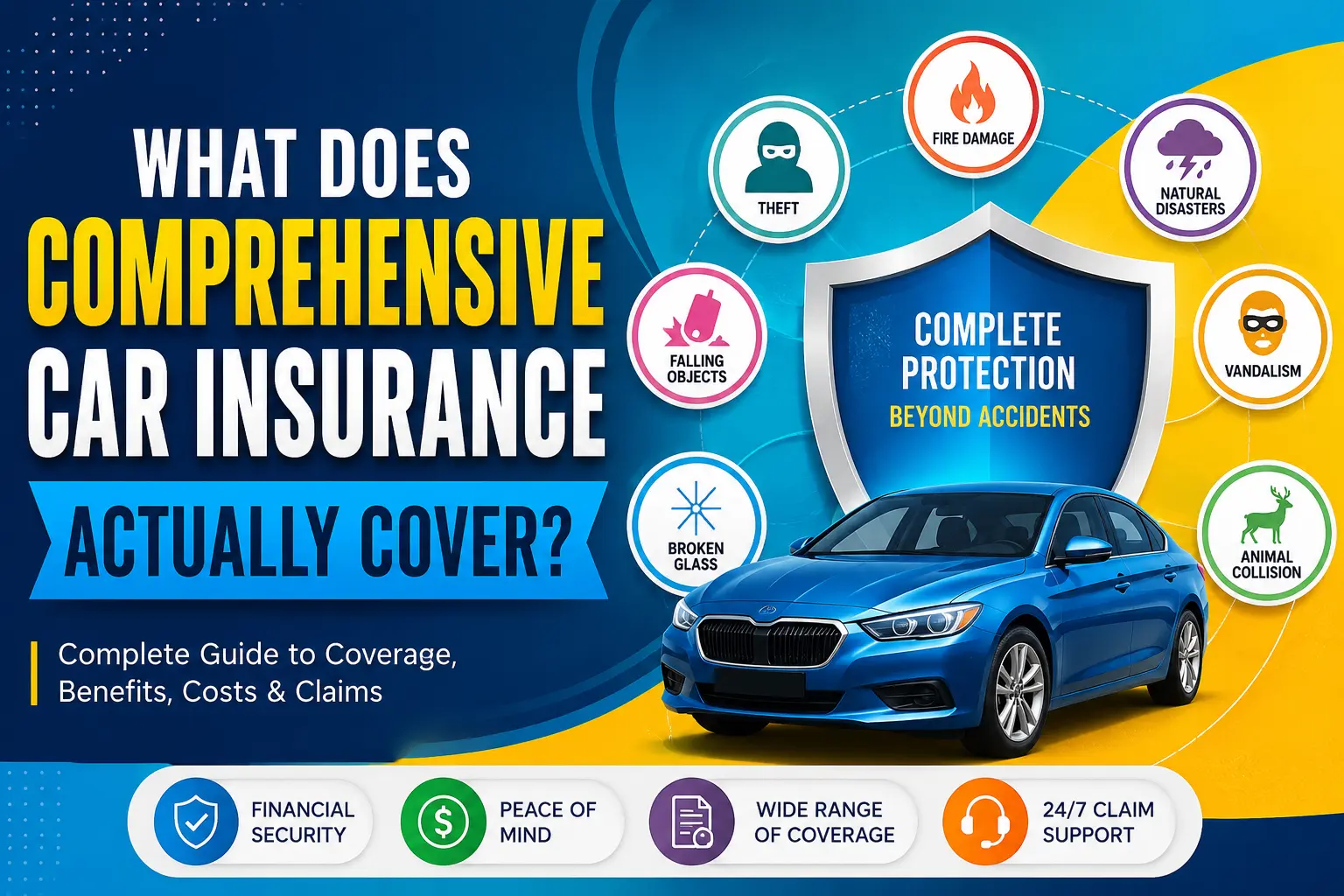
If you own a car, protecting it against unexpected damage is just as important as driving safely. Many drivers ask, what does comprehensive car insurance actually cover, especially when comparing different insurance policies. Understanding this coverage can help you avoid expensive repair bills and choose the right protection for your vehicle.
Comprehensive car insurance is an optional type of auto insurance that pays for damage caused by events other than collisions. It covers risks such as theft, fire, vandalism, storms, hail, falling objects, animal collisions, and certain natural disasters. While it does not replace liability insurance, it provides valuable financial protection for your own vehicle.
People often choose comprehensive coverage because accidents are not the only threat to a car. Weather events, theft, and unexpected incidents can happen at any time. Whether you own a brand-new vehicle, finance your car, or simply want greater peace of mind, this policy may be worth considering.
This guide explains what does comprehensive car insurance actually cover, what it does not cover, how claims work, costs, eligibility, expert tips, and common mistakes to avoid so you can make an informed insurance decision.
Featured Snippet Answer
What does comprehensive car insurance actually cover? Comprehensive car insurance covers damage to your vehicle caused by non-collision events such as theft, fire, vandalism, hail, floods, storms, falling objects, broken windshields, and animal collisions. It does not usually cover collision damage, normal wear and tear, or mechanical breakdowns.
Key Takeaways
- Comprehensive insurance protects against non-collision vehicle damage.
- It commonly covers theft, fire, weather damage, vandalism, and animal impacts.
- Coverage varies by insurer, policy limits, and deductible.
- Comprehensive insurance is often required by lenders for financed vehicles.
- Comparing policies helps you find the best value and protection.
Insurance Overview
| Insurance Type | Coverage Category | Best For | Average Premium | Claim Process | Difficulty Level |
|---|---|---|---|---|---|
| Comprehensive Car Insurance | Optional Vehicle Protection | New and valuable vehicles | $15-$60 per month (varies) | Online, phone, or mobile app | Easy to Moderate |
Why You Need This Insurance
- Protects your vehicle against theft.
- Covers weather-related damage like hail and floods.
- Pays for repairs after vandalism.
- Helps replace stolen vehicles.
- Reduces unexpected repair expenses.
- Offers greater financial security.
- Provides peace of mind during unpredictable events.
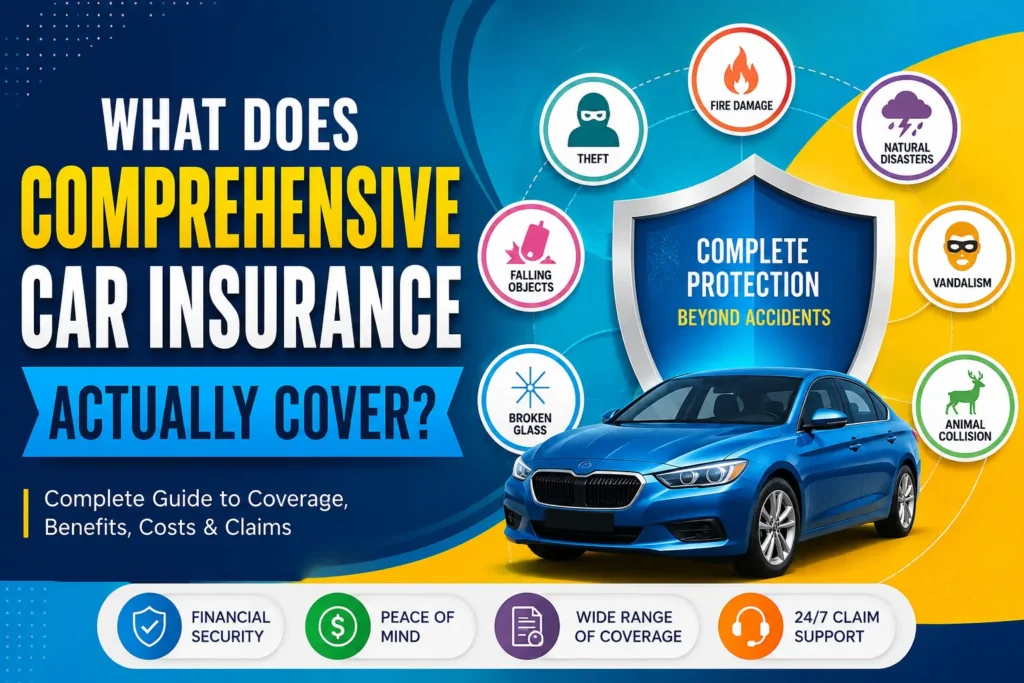
What Does What does comprehensive car insurance actually cover Cover?
Understanding what does comprehensive car insurance actually cover starts with knowing the major protections included in most policies.
Theft
What it protects
If your vehicle is stolen or parts are stolen, comprehensive insurance may pay for replacement or repairs.
Coverage limits
Up to the vehicle’s actual cash value after deductible.
Important notes
Police reports are usually required.
Fire Damage
What it protects
Damage caused by accidental fires or electrical fires.
Coverage limits
Subject to policy limits.
Important notes
Intentional damage is not covered.
Vandalism
What it protects
Damage caused by intentional acts such as broken windows or scratched paint.
Coverage limits
Repair costs after deductible.
Important notes
Documentation helps support your claim.
Natural Disasters
What it protects
Floods, hurricanes, tornadoes, earthquakes (where available), hail, and storms.
Coverage limits
Depends on policy terms.
Important notes
Coverage varies between insurance companies.
Falling Objects
What it protects
Damage from tree branches, rocks, or other falling objects.
Coverage limits
Repair costs up to policy limits.
Important notes
Maintenance-related tree issues may affect claims.
Animal Collisions
What it protects
Damage caused by hitting deer or other animals.
Coverage limits
Vehicle repair costs after deductible.
Important notes
Usually covered under comprehensive rather than collision insurance.
Broken Windshield and Glass
What it protects
Cracked or shattered windshields and windows.
Coverage limits
Depends on insurer.
Important notes
Some companies offer zero-deductible glass coverage.
Civil Disturbances
What it protects
Damage from riots or civil unrest.
Coverage limits
According to policy conditions.
Important notes
Review policy wording carefully.
What Is Not Covered?
Although what does comprehensive car insurance actually cover includes many risks, several situations are excluded.
- Collision accidents with another vehicle.
- Damage caused by careless driving.
- Mechanical breakdowns.
- Engine failure due to poor maintenance.
- Tire wear.
- Oil changes and routine maintenance.
- Personal belongings inside the vehicle.
- Driving without permission under certain circumstances.
- Racing or illegal activities.
- Intentional damage caused by the owner.
Eligibility Requirements
Most insurance companies have simple eligibility requirements.
Age Requirements
Drivers usually must meet the minimum legal driving age in their country or state.
Residency Requirements
Applicants generally need a valid residential address where the vehicle is registered.
Income Requirements
There are usually no income requirements.
Other Eligibility Criteria
- Valid driver’s license.
- Vehicle registration.
- Vehicle identification number (VIN).
- Insurable vehicle.
- Payment of premium.
Types of What does comprehensive car insurance actually cover
Type 1: Comprehensive Only
This policy protects only against non-collision events. It does not pay for collision damage.
Type 2: Comprehensive with Collision
This combines comprehensive protection with collision coverage, creating broader protection for your vehicle.
Type 3: Full Coverage Package
This package usually includes:
- Comprehensive insurance
- Collision insurance
- Liability insurance
- Optional roadside assistance
- Rental reimbursement
- Uninsured motorist coverage
How to Apply for What does comprehensive car insurance actually cover
Step 1
Gather your driver’s license, vehicle information, and registration.
Step 2
Compare quotes from several insurance providers.
Step 3
Select your deductible and coverage limits.
Step 4
Review optional add-ons.
Step 5
Complete the online or phone application.
Step 6
Submit required documents.
Step 7
Pay your first premium.
Step 8
Receive your insurance documents and ID card.
Required Documents
| Document Name | Purpose | Mandatory or Optional |
|---|---|---|
| Driver’s License | Identity verification | Mandatory |
| Vehicle Registration | Vehicle ownership | Mandatory |
| VIN | Vehicle identification | Mandatory |
| Previous Insurance | Verify insurance history | Optional |
| Proof of Address | Residency verification | Mandatory |
| Loan Information | Financed vehicle details | Optional |
Cost of What does comprehensive car insurance actually cover
The cost depends on many factors.
Premium Factors
- Vehicle value
- Driver age
- Driving history
- Location
- Annual mileage
- Deductible
- Claims history
Monthly Costs
Many drivers pay between $15 and $60 per month for comprehensive coverage alone, although rates vary widely.
Annual Costs
Annual premiums commonly range from $180 to $720 depending on risk factors.
Ways to Save Money
- Increase your deductible.
- Bundle home and auto insurance.
- Maintain a clean driving record.
- Install anti-theft devices.
- Compare quotes annually.
- Ask about discounts.
- Avoid unnecessary claims.
Expert Tips for Choosing the Best Policy
- Compare at least three insurance companies.
- Understand your deductible before buying.
- Review policy exclusions carefully.
- Consider your vehicle’s current value.
- Check customer claim reviews.
- Ask about glass coverage.
- Review optional endorsements.
- Update your coverage every year.
Common Mistakes to Avoid
- Buying the cheapest policy without reading coverage.
- Choosing a deductible that is too high.
- Forgetting to update vehicle information.
- Missing premium payments.
- Assuming comprehensive covers collision damage.
- Not documenting vehicle condition.
- Waiting too long to report claims.
Benefits of What does comprehensive car insurance actually cover
Financial Protection
Major repair bills become much easier to manage.
Risk Management
Unexpected events like theft or storms become less financially stressful.
Peace of Mind
You can drive knowing many unexpected risks are covered.
Long-Term Benefits
Comprehensive coverage can protect the value of your investment over time and may satisfy lender requirements.
How to File a Claim
Step 1
Ensure everyone is safe.
Step 2
Document the damage with clear photographs.
Step 3
Report the incident to the police if necessary.
Step 4
Notify your insurance company immediately.
Step 5
Complete claim forms.
Step 6
Meet with the insurance adjuster.
Step 7
Receive repair approval.
Step 8
Complete repairs or receive payment if applicable.
Claim Approval Tips
- Report claims quickly.
- Keep all receipts.
- Take detailed photos.
- Provide accurate information.
- Cooperate with adjusters.
- Maintain regular vehicle maintenance records.
- Read your policy before filing.
Coverage Comparison
| Feature | Basic Plan | Standard Plan | Premium Plan |
|---|---|---|---|
| Coverage Amount | Limited | Moderate | Highest |
| Premium Cost | Low | Medium | Higher |
| Theft Protection | Yes | Yes | Yes |
| Glass Coverage | Limited | Yes | Enhanced |
| Rental Car | No | Optional | Included |
| Roadside Assistance | No | Optional | Included |
| Claim Support | Standard | Priority | Premium Support |
Insurance Comparison Table
| Coverage Type | Comprehensive | Collision | Liability |
|---|---|---|---|
| Theft | Yes | No | No |
| Fire | Yes | No | No |
| Flood | Yes | No | No |
| Vandalism | Yes | No | No |
| Collision Damage | No | Yes | No |
| Damage to Others | No | No | Yes |
Our Latest Posts
How to Lower Your Car Insurance Premium Legally
Frequently Asked Questions
Is comprehensive car insurance worth buying?
Yes. It is valuable for drivers who want protection against theft, weather damage, fire, vandalism, and other non-collision events.
How much does comprehensive insurance cost?
Costs vary, but many drivers pay between $15 and $60 per month depending on vehicle value and risk factors.
Can I apply online?
Yes. Most insurers allow online applications and instant quotes.
What documents are required?
Typically a driver’s license, vehicle registration, VIN, and proof of address.
How long does claim approval take?
Simple claims may be processed within a few days, while complex claims can take several weeks.
Can I cancel my policy?
Yes. Most insurers allow cancellation, although fees or refunds depend on policy terms.
Does comprehensive insurance cover pre-existing damage?
No. Existing damage before purchasing the policy is generally excluded.
What happens if I miss a payment?
Your insurer may provide a grace period, but continued non-payment could result in policy cancellation.
Does comprehensive insurance cover floods?
Yes, flood damage is commonly covered if included in the policy.
Does comprehensive insurance cover stolen car parts?
In many cases, yes, provided the theft meets policy conditions.
Related Insurance Guides
- Collision Insurance vs Comprehensive Insurance
- How to Lower Your Car Insurance Premium Legally
- Best Car Insurance for New Drivers
- Gap Insurance Explained
- How to File a Car Insurance Claim Successfully
Final Thoughts
Understanding what does comprehensive car insurance actually cover helps you make smarter decisions when protecting your vehicle. Comprehensive insurance offers valuable protection against theft, fire, severe weather, vandalism, falling objects, and many other unexpected events that are beyond your control. However, every insurance company has different policy terms, deductibles, and exclusions, so comparing quotes and reading policy documents carefully is essential. Choosing the right coverage today can save significant money and stress when unexpected events happen in the future.
Insurance Summary Card
| Insurance Name | Comprehensive Car Insurance |
| Coverage Type | Optional Vehicle Protection |
| Eligibility | Licensed drivers with an insurable vehicle |
| Premium Range | $15-$60/month (varies) |
| Key Benefits | Theft, fire, vandalism, weather, glass, animal collisions |
| Claim Process | Report incident, submit documents, inspection, settlement |
| Required Documents | Driver’s License, Registration, VIN, Proof of Address |
| Official Website | Your chosen insurance provider’s official website |
| Important Notes | Review deductibles, exclusions, and coverage limits before purchasing. |
