
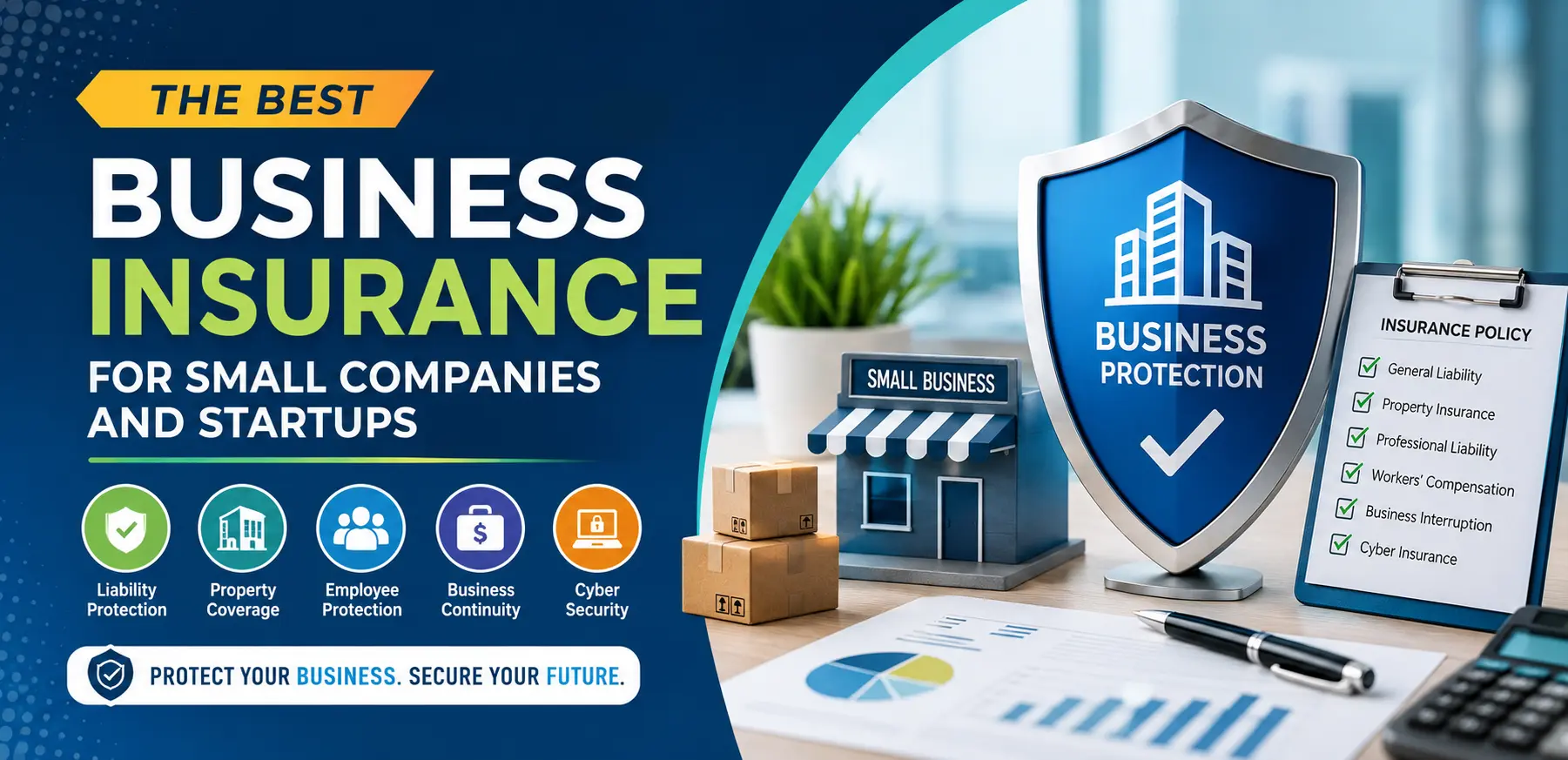
Choosing the Best business insurance for small companies and startups is one of the smartest decisions any business owner can make. Whether you are launching a new startup, running a family-owned business, or managing a growing company, unexpected events can cause financial losses. A single lawsuit, workplace accident, cyberattack, or property damage could seriously affect your business if you do not have the right insurance protection.
Many entrepreneurs focus on sales, marketing, and growth but overlook business insurance until something goes wrong. However, having the right policy protects your company’s finances, reputation, employees, and future growth. Different businesses have different risks, so selecting suitable coverage is essential.
This guide explains everything you need to know about the Best business insurance for small companies and startups, including available coverage, exclusions, costs, eligibility, policy types, claims, and practical tips. By the end of this article, you will be able to compare insurance options confidently and choose the policy that best fits your business needs.
Featured Snippet Answer
The Best business insurance for small companies and startups combines general liability, commercial property, professional liability, workers’ compensation, and cyber insurance. The right policy protects against lawsuits, property damage, employee injuries, and business interruptions while helping companies operate with greater financial security.
Key Takeaways
- Compare multiple insurance providers before buying.
- Choose coverage based on your industry’s risks.
- Bundle policies to reduce premium costs.
- Review your coverage annually as your business grows.
- Maintain accurate records to simplify future claims.
Insurance Overview
| Insurance Type | Coverage Category | Best For | Average Premium | Claim Process | Difficulty Level |
|---|---|---|---|---|---|
| Business Insurance | Commercial Insurance | Small businesses and startups | $40-$250/month | Online or agent-assisted | Easy to Moderate |
Why You Need This Insurance
The Best business insurance for small companies and startups offers valuable protection in many situations.
- Protects against costly lawsuits.
- Covers damage to business property.
- Helps recover after unexpected disasters.
- Protects employees through workers’ compensation.
- Supports business continuity after interruptions.
- Improves credibility with customers and clients.
- May be required by landlords, lenders, or contracts.
What Does Best Business Insurance for Small Companies and Startups Cover?
Coverage varies depending on the insurer and policy selected.
| Coverage Name | What It Protects | Coverage Limits | Important Notes |
|---|---|---|---|
| General Liability | Customer injuries, property damage | Policy limits vary | Essential for almost every business |
| Commercial Property | Office, equipment, inventory | Based on property value | Covers fire, theft, and storms |
| Professional Liability | Errors and negligence claims | Selected policy limits | Ideal for consultants and service providers |
| Workers’ Compensation | Employee injuries | According to local laws | Often legally required |
| Business Interruption | Lost income during closure | Policy dependent | Helps pay ongoing expenses |
| Cyber Insurance | Data breaches and cyberattacks | Based on policy | Increasingly important for digital businesses |
| Commercial Auto | Business vehicles | Vehicle value and liability | Needed for company-owned vehicles |
What Is Not Covered?
Even the Best business insurance for small companies and startups has exclusions.
Common exclusions include:
- Intentional damage caused by the business owner.
- Illegal business activities.
- Employee fraud unless specifically covered.
- Normal equipment wear and tear.
- Flood or earthquake damage without additional coverage.
- Certain contractual liabilities.
- Losses caused by war or terrorism in many policies.
- Known risks not disclosed during application.
Always read your policy carefully to understand exclusions.
Eligibility Requirements
Eligibility depends on the insurer, but common requirements include:
Age Requirements
Business owners generally must be at least 18 years old.
Residency Requirements
The business should be legally registered in the country where coverage is purchased.
Income Requirements
Most insurers do not require a minimum income, although annual revenue affects premium calculations.
Other Eligibility Criteria
- Valid business registration.
- Business address.
- Industry information.
- Estimated annual revenue.
- Number of employees.
- Claims history.
- Business operations details.
Types of Best Business Insurance for Small Companies and Startups
General Liability Insurance
This policy protects against third-party injuries, property damage, and legal expenses. It is considered one of the most important forms of business insurance.
Business Owner’s Policy (BOP)
A Business Owner’s Policy combines general liability and commercial property insurance into one affordable package. Many startups choose this option because it offers comprehensive protection at a lower cost.
Professional Liability Insurance
Also called Errors and Omissions (E&O) insurance, this coverage protects businesses that provide professional advice or services.
Commercial Property Insurance
Protects buildings, equipment, furniture, computers, and inventory against covered risks.
Cyber Liability Insurance
As cybercrime increases, this coverage helps businesses recover from hacking, ransomware, and data breaches.
Workers’ Compensation Insurance
Provides medical expenses and wage replacement for employees injured while working.
How to Apply for Best Business Insurance for Small Companies and Startups
Step 1
Identify your business risks and required coverage.
Step 2
Prepare basic business information including revenue, employees, and operations.
Step 3
Request quotes from several insurance providers.
Step 4
Compare policy limits, deductibles, exclusions, and premiums.
Step 5
Choose the policy offering the best balance of protection and affordability.
Step 6
Submit the insurance application.
Step 7
Provide supporting documents if requested.
Step 8
Pay the first premium.
Step 9
Receive your policy documents and review them carefully.
Required Documents
| Document Name | Purpose | Mandatory or Optional |
|---|---|---|
| Business Registration | Verify legal business | Mandatory |
| Business License | Confirm operation | Mandatory |
| Owner Identification | Identity verification | Mandatory |
| Tax Identification Number | Tax records | Mandatory |
| Financial Statements | Premium assessment | Optional |
| Employee List | Workers’ compensation | Optional |
| Property Details | Property coverage | Optional |
| Previous Insurance Policy | Claims history | Optional |
Cost of Best Business Insurance for Small Companies and Startups
The cost depends on several factors.
Premium Factors
- Industry risk
- Business size
- Number of employees
- Annual revenue
- Claims history
- Location
- Coverage limits
- Deductible amount
Average Monthly Cost
Most small businesses pay between $40 and $250 per month, depending on coverage.
Average Annual Cost
Annual premiums often range from $500 to $3,000 or more.
Ways to Save Money
- Bundle multiple policies.
- Increase deductibles if affordable.
- Improve workplace safety.
- Install security systems.
- Compare quotes annually.
- Maintain a clean claims record.
- Pay premiums annually instead of monthly.
Expert Tips for Choosing the Best Policy
Selecting the Best business insurance for small companies and startups requires careful comparison.
- Understand your business risks first.
- Compare several insurance companies.
- Read policy exclusions carefully.
- Choose realistic coverage limits.
- Consider a Business Owner’s Policy.
- Review customer claim satisfaction ratings.
- Ask about discounts.
- Update coverage as your business grows.
- Keep detailed business records.
Common Mistakes to Avoid
Many businesses make avoidable insurance mistakes.
- Buying only the cheapest policy.
- Ignoring cyber insurance.
- Underestimating property value.
- Forgetting business interruption coverage.
- Failing to update policies after expansion.
- Not reading exclusions.
- Delaying claims reporting.
- Choosing insufficient liability limits.
Benefits of Best Business Insurance for Small Companies and Startups
The Best business insurance for small companies and startups offers long-term value.
Financial Protection
Helps pay lawsuits, repairs, and unexpected expenses.
Risk Management
Reduces financial uncertainty from accidents and disasters.
Peace of Mind
Allows owners to focus on growing the business.
Long-Term Benefits
Protects business assets, supports continuity, improves client confidence, and strengthens financial stability.
How to File a Claim
Step 1
Report the incident immediately.
Step 2
Document all damage with photos and videos.
Step 3
Notify your insurance company.
Step 4
Complete the claim forms.
Step 5
Provide supporting documents.
Step 6
Cooperate with the insurance adjuster.
Step 7
Review the settlement offer.
Step 8
Receive payment if the claim is approved.
Claim Approval Tips
Improve your chances of successful claims by following these tips.
- Report losses promptly.
- Keep accurate business records.
- Save receipts and invoices.
- Maintain updated inventories.
- Follow policy conditions.
- Cooperate during investigations.
- Avoid providing incomplete information.
Coverage Comparison
| Feature | Basic Plan | Standard Plan | Premium Plan |
|---|---|---|---|
| Coverage Amount | Low | Medium | High |
| Premium Cost | Low | Moderate | Higher |
| General Liability | ✔ | ✔ | ✔ |
| Property Coverage | Limited | Expanded | Comprehensive |
| Cyber Insurance | Optional | Included | Enhanced |
| Business Interruption | No | Yes | Yes |
| Professional Liability | Optional | Included | Higher Limits |
| Claim Support | Standard | Priority | Dedicated Support |
Insurance Comparison Table
| Policy Type | Best For | Main Protection | Typical Cost |
|---|---|---|---|
| General Liability | All businesses | Third-party claims | Low |
| Business Owner’s Policy | Small businesses | Liability + Property | Moderate |
| Professional Liability | Service providers | Professional mistakes | Moderate |
| Cyber Insurance | Online businesses | Data breaches | Moderate |
| Workers’ Compensation | Employers | Employee injuries | Varies |
Our Latest Posts
Travel Insurance for Students Studying Abroad
Frequently Asked Questions
Is the Best business insurance for small companies and startups worth buying?
Yes. It protects businesses from expensive financial losses that could otherwise threaten operations.
How much does it cost?
Most businesses pay between $40 and $250 per month depending on industry, size, and coverage.
Can I apply online?
Yes. Many insurance companies allow online applications and instant quotes.
What documents are required?
Typically, business registration, owner identification, business license, and company information.
How long does claim approval take?
Simple claims may be approved within a few days, while complex claims can take several weeks.
Can I cancel my policy?
Yes. Most insurers allow cancellation, although cancellation fees or conditions may apply.
Does it cover pre-existing conditions?
Existing damage or known losses before the policy starts are generally not covered.
What happens if I miss a payment?
Coverage may lapse if payments are missed. Contact your insurer immediately if payment issues arise.
Is cyber insurance necessary?
For businesses storing customer or payment information, cyber insurance is becoming increasingly important.
Should startups buy insurance immediately?
Yes. Even new businesses face liability risks from the first day they begin operating.
Related Insurance Guides
- General Liability Insurance for Small Businesses
- Professional Liability Insurance Explained
- Cyber Insurance for Growing Businesses
- Workers’ Compensation Insurance Guide
- Commercial Property Insurance Basics
Final Thoughts
Choosing the Best business insurance for small companies and startups is an investment in your company’s future. The right policy helps protect your business from lawsuits, property damage, cyber threats, employee injuries, and unexpected interruptions. Every business has unique risks, so take time to compare providers, understand policy terms, and select coverage that matches your needs. Regularly reviewing your insurance as your company grows will ensure your protection keeps pace with your success.
Business Insurance Summary
Insurance Name: Best Business Insurance for Small Companies and Startups
Coverage Type: Commercial Business Insurance
Eligibility: Registered small businesses, startups, and eligible business owners
Premium Range: Approximately $40–$250 per month
Key Benefits:
- General liability protection
- Property damage coverage
- Business interruption support
- Cyber protection options
- Workers’ compensation availability
Claim Process: Report incident → Submit documents → Assessment → Claim approval → Payment
Required Documents: Business registration, identification, business license, financial information (if requested)
Official Website: Visit the official website of your chosen insurance provider or your country’s insurance regulatory authority.
Important Notes: Compare multiple providers, review exclusions carefully, and update your policy whenever your business expands.
