
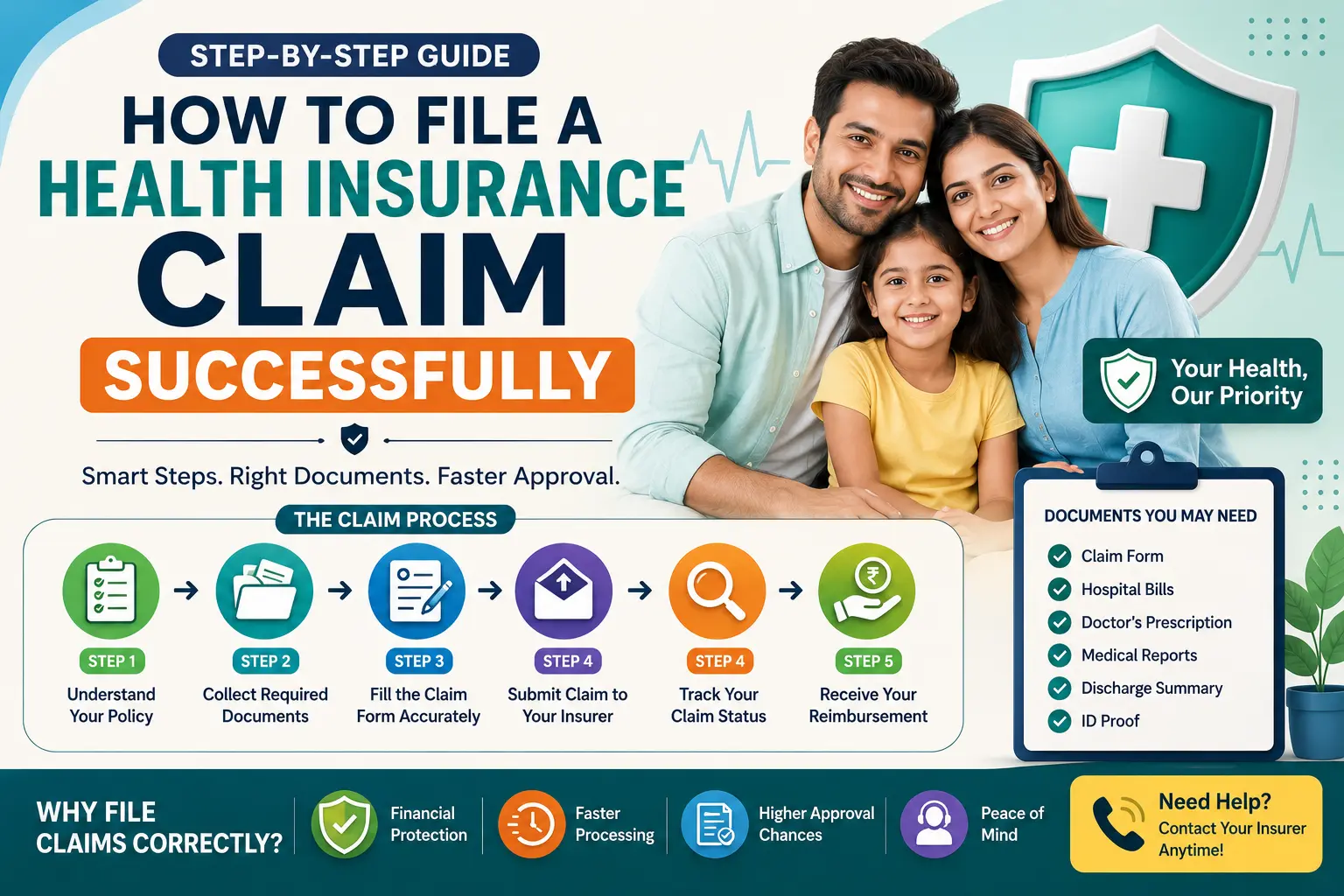
Filing a health insurance claim can seem complicated, especially if you are dealing with a medical emergency or unexpected healthcare expenses. Understanding How to file a health insurance claim successfully can help you receive reimbursements faster, avoid claim rejections, and reduce financial stress during difficult times.
Many people purchase health insurance to protect themselves from high medical costs, but they often struggle when it comes to the actual claim process. Missing documents, incorrect information, delayed submissions, and misunderstanding policy terms are some of the most common reasons claims get delayed or denied.
Learning How to file a health insurance claim successfully is important for policyholders of all ages. Whether you have individual health insurance, family coverage, senior citizen insurance, or employer-sponsored health benefits, knowing the proper steps can make the process smoother and more efficient.
This comprehensive guide explains How to file a health insurance claim successfully, including claim types, required documents, approval tips, common mistakes, and best practices to maximize your chances of receiving a timely claim settlement.
Featured Snippet Answer
How to file a health insurance claim successfully involves understanding your policy, collecting required documents, submitting accurate information, following insurer guidelines, and responding quickly to requests for additional details. Proper preparation helps reduce claim delays and increases approval chances.
Key Takeaways
- Understand your policy before filing a claim.
- Keep all medical records and bills organized.
- Submit claim forms accurately and on time.
- Use network hospitals whenever possible.
- Follow up regularly until claim settlement.
Insurance Overview
| Feature | Details |
|---|---|
| Insurance Type | Health Insurance Claim Guide |
| Coverage Category | Medical Expense Reimbursement |
| Best For | Health Insurance Policyholders |
| Average Premium | Depends on Policy |
| Claim Process | Cashless or Reimbursement |
| Difficulty Level | Moderate |
Why You Need This Information
Understanding How to file a health insurance claim successfully offers several benefits:
- Improves claim approval chances.
- Reduces claim processing delays.
- Helps avoid unnecessary claim rejections.
- Maximizes insurance benefits.
- Simplifies reimbursement procedures.
- Protects against financial losses.
- Improves confidence during medical emergencies.
What Does How to File a Health Insurance Claim Successfully Cover?
Cashless Claims
What it Protects: Direct payment between insurer and hospital.
Coverage Limits: Based on policy coverage.
Important Notes: Usually available at network hospitals.
Reimbursement Claims
What it Protects: Medical expenses paid upfront by the policyholder.
Coverage Limits: Subject to policy conditions.
Important Notes: Requires submission of bills and receipts.
Emergency Claims
What it Protects: Unexpected medical emergencies.
Coverage Limits: Depends on policy benefits.
Important Notes: Immediate notification may be required.
Hospitalization Claims
What it Protects: Inpatient treatment costs.
Coverage Limits: Based on selected coverage.
Important Notes: Admission records are important.
Daycare Procedure Claims
What it Protects: Medical treatments not requiring overnight stays.
Coverage Limits: Varies by policy.
Important Notes: Increasingly covered by modern plans.
Diagnostic Test Claims
What it Protects: Approved tests and examinations.
Coverage Limits: Determined by insurer.
Important Notes: Prescriptions may be required.
What Is Not Covered?
Even when learning How to file a health insurance claim successfully, it is important to understand common exclusions:
- Cosmetic surgeries.
- Experimental treatments.
- Non-prescribed medications.
- Fraudulent claims.
- Treatments excluded under policy terms.
- Services beyond coverage limits.
- Incomplete or inaccurate claim submissions.
Eligibility Requirements
Age Requirements
Any active health insurance policyholder can file claims according to policy terms.
Residency Requirements
Policyholders must generally meet residency requirements specified by the insurer.
Income Requirements
There are usually no income requirements for claim submission.
Other Eligibility Criteria
- Active insurance policy.
- Valid medical treatment.
- Covered healthcare service.
- Timely claim submission.
Types of How to File a Health Insurance Claim Successfully
Type 1: Cashless Claim Process
The insurer directly settles approved medical expenses with the hospital.
Advantages:
- Minimal paperwork.
- Lower financial burden.
- Faster processing.
Type 2: Reimbursement Claim Process
The policyholder pays expenses first and later seeks reimbursement.
Advantages:
- Greater hospital flexibility.
- Useful for non-network hospitals.
- Suitable for planned treatments.
Type 3: Emergency Claim Process
Used for urgent medical situations requiring immediate treatment.
Advantages:
- Rapid medical attention.
- Emergency coverage support.
- Protection during unexpected events.
How to Apply for How to File a Health Insurance Claim Successfully
Step 1
Review your health insurance policy carefully.
Step 2
Verify that the treatment is covered under your plan.
Step 3
Identify whether the claim will be cashless or reimbursement.
Step 4
Contact your insurance provider.
Step 5
Gather all required documents.
Step 6
Complete the claim form accurately.
Step 7
Submit supporting documents.
Step 8
Track claim status regularly.
Step 9
Respond promptly to any requests from the insurer.
Step 10
Receive claim settlement or reimbursement.
Required Documents
| Document Name | Purpose | Mandatory or Optional |
|---|---|---|
| Claim Form | Claim Processing | Mandatory |
| Hospital Bills | Expense Verification | Mandatory |
| Medical Reports | Treatment Evidence | Mandatory |
| Doctor Prescriptions | Medical Necessity Proof | Mandatory |
| Discharge Summary | Hospitalization Details | Mandatory |
| Diagnostic Reports | Treatment Verification | Optional |
| Identity Proof | Policyholder Verification | Optional |
Cost of How to File a Health Insurance Claim Successfully
Premium Factors
Claim eligibility depends on policy coverage, not claim filing costs.
Monthly Costs
Policy premiums vary depending on insurer and coverage.
Annual Costs
Annual insurance expenses include premiums, deductibles, and copayments.
Ways to Save Money
- Use network hospitals.
- Submit claims promptly.
- Understand policy exclusions.
- Maintain accurate medical records.
- Avoid unnecessary treatments.
Expert Tips for Choosing the Best Policy
- Select insurers with strong claim settlement records.
- Review claim procedures before purchasing.
- Check hospital network size.
- Understand waiting periods.
- Compare reimbursement options.
- Verify customer support availability.
- Review policy exclusions carefully.
- Read claim settlement reviews.
Common Mistakes to Avoid
Missing Deadlines
Late submissions can lead to claim rejection.
Providing Incomplete Documents
Missing paperwork delays claim processing.
Ignoring Policy Terms
Understanding coverage limitations is essential.
Submitting Incorrect Information
Errors may result in claim denial.
Failing to Keep Copies
Always retain copies of submitted documents.
Benefits of How to File a Health Insurance Claim Successfully
Financial Protection
Successful claims reduce out-of-pocket medical expenses.
Risk Management
Insurance claims help manage healthcare-related financial risks.
Peace of Mind
Knowing the process reduces stress during medical situations.
Long-Term Benefits
Efficient claim management maximizes policy value over time.
How to File a Claim
Step 1
Notify the insurer as soon as possible after treatment or hospitalization.
Step 2
Collect all medical bills, reports, and supporting documents.
Step 3
Download or obtain the official claim form.
Step 4
Fill out the claim form accurately and completely.
Step 5
Attach all required supporting documents.
Step 6
Submit the claim through the insurer’s preferred method.
Step 7
Receive acknowledgment of claim submission.
Step 8
Respond to additional document requests if needed.
Step 9
Monitor claim status through the insurer’s portal.
Step 10
Receive claim approval and reimbursement or direct settlement.
Claim Approval Tips
- Submit claims immediately after treatment.
- Double-check all information.
- Keep organized medical records.
- Use approved healthcare providers.
- Follow insurer instructions carefully.
- Maintain communication with claim representatives.
- Understand policy coverage limits.
- Retain copies of every document.
Coverage Comparison
| Feature | Basic Plan | Standard Plan | Premium Plan |
|---|---|---|---|
| Coverage Amount | Low | Medium | High |
| Premium Cost | Lower | Moderate | Higher |
| Claim Support | Basic | Priority | Dedicated |
| Hospital Network | Limited | Expanded | Extensive |
| Processing Speed | Standard | Faster | Fastest |
Insurance Comparison Table
| Feature | Cashless Claim | Reimbursement Claim | Emergency Claim |
|---|---|---|---|
| Upfront Payment | No | Yes | Sometimes |
| Documentation | Moderate | Extensive | Moderate |
| Processing Time | Faster | Slower | Variable |
| Hospital Network Required | Yes | No | Not Always |
| Convenience | High | Medium | High |
Frequently Asked Questions
Is this insurance worth buying?
Yes. Understanding How to file a health insurance claim successfully helps maximize the value of your health insurance policy.
How much does it cost?
Claim filing itself usually does not involve additional fees.
Can I apply online?
Yes. Most insurers offer online claim submission.
What documents are required?
Claim forms, hospital bills, medical reports, prescriptions, and discharge summaries.
How long does claim approval take?
Processing times vary but typically range from a few days to several weeks.
Can I cancel my policy?
Yes, according to the insurer’s cancellation terms.
Does it cover pre-existing conditions?
Coverage depends on policy terms and waiting periods.
What happens if I miss a payment?
Coverage may lapse after the grace period.
Can claims be rejected?
Yes. Incomplete documents, exclusions, or inaccurate information may lead to rejection.
How can I improve approval chances?
Submit complete documents, follow policy rules, and provide accurate information.
Related Insurance Guides
- Best Health Insurance Plans for Families in 2026
- Health Insurance Plans With Low Monthly Premiums
- Family Health Insurance Plans With Maternity Coverage
- Best Senior Citizen Health Insurance Plans in 2026
- Critical Illness Insurance Benefits and Coverage Guide
Our Latest Posts
Health Insurance Plans With Low Monthly Premiums
Final Thoughts
Learning How to file a health insurance claim successfully is an essential skill for every policyholder. Even the best health insurance policy cannot provide value if claims are delayed, denied, or improperly submitted.
By understanding your policy, organizing documents, meeting deadlines, and following insurer requirements, you can improve claim approval rates and receive financial support when you need it most. Taking a proactive approach today can save time, money, and stress during future healthcare situations.
Health Insurance Claim Guide
Insurance Name: How to File a Health Insurance Claim Successfully
Coverage Type: Health Insurance Claims Assistance
Eligibility: Active Health Insurance Policyholders
Premium Range: Depends on Existing Policy
Key Benefits:
- Faster Claim Processing
- Higher Approval Chances
- Reduced Claim Errors
- Better Documentation Management
- Improved Financial Protection
Claim Process: Cashless, Reimbursement, and Emergency Claims
Required Documents: Claim Form, Bills, Reports, Prescriptions, Discharge Summary
Official Website: Visit Your Insurance Provider’s Claims Portal
Important Notes: Submit complete documentation, follow deadlines, and review policy terms carefully.
